01
Wetting & contact behavior
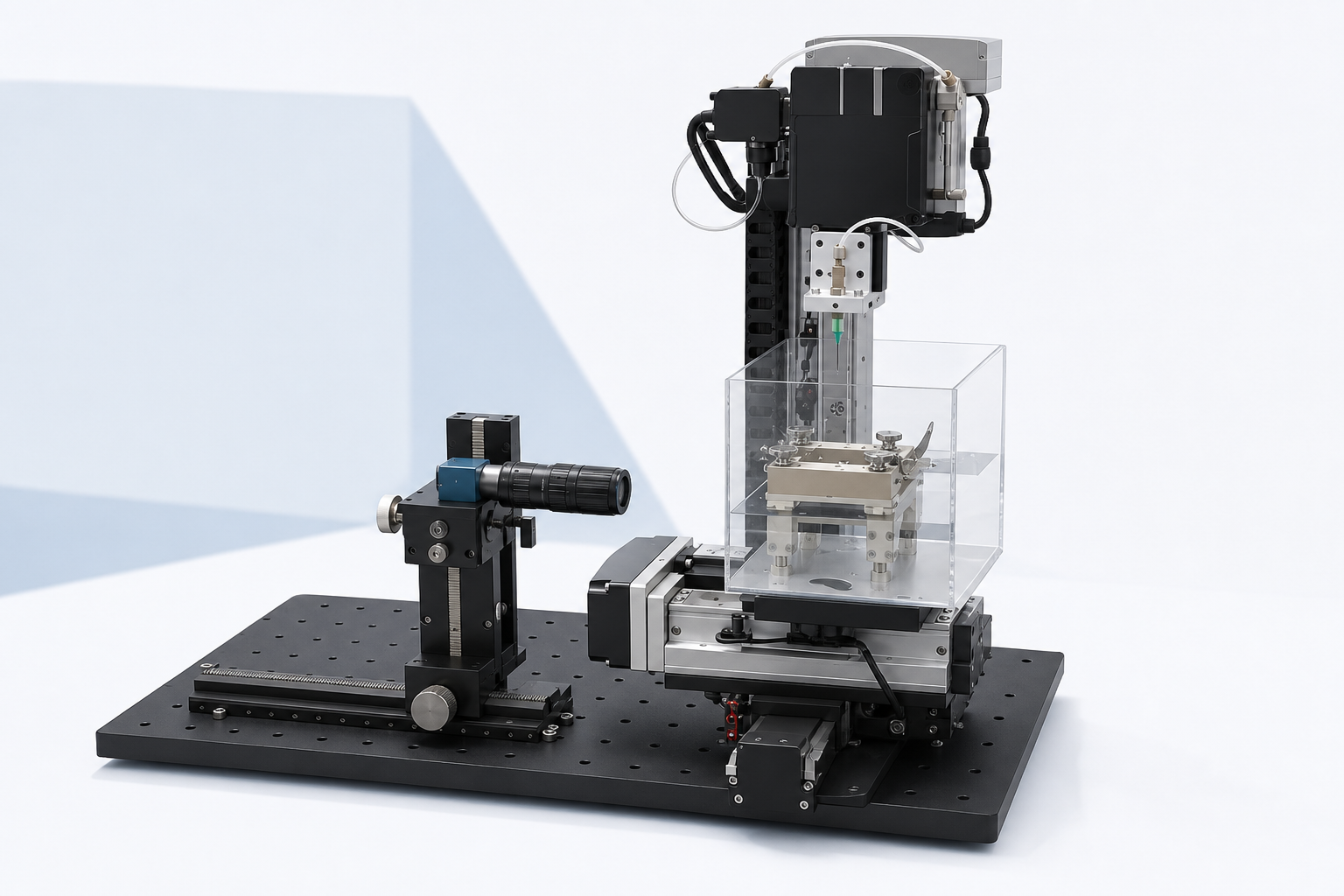
Observe how droplets, bubbles and a material surface meet to study wetting and interface behavior.
View DCAA-101-> 衡微宏INTERFACE INSTRUMENTS
This page helps identify the research question and observation direction. Specific capabilities, images and configurations are explained on the product pages.
气泡泵浦耗散计时电流法(Bubble Pump Consumption Chronoamperometry, BPCC)是一种原位表征方法。在恒定电位下向气体扩散电极表面定量注入气泡,气泡进入电极多孔结构并诱导局部气液传质变化,产生特征电流响应。通过分析电流-时间曲线,结合气泡传输行为与电化学动力学模型,可定量解析 GDE 的孔隙率、有效活性位点密度与气体扩散系数等关键参数。与传统离线表征不同,BPCC 在接近实际工作状态下建立气泡行为、电化学响应与电极内部传输过程的关联。
查看 BPCC-A 产品详情->Observe how droplets, bubbles and a material surface meet to study wetting and interface behavior.
View DCAA-101->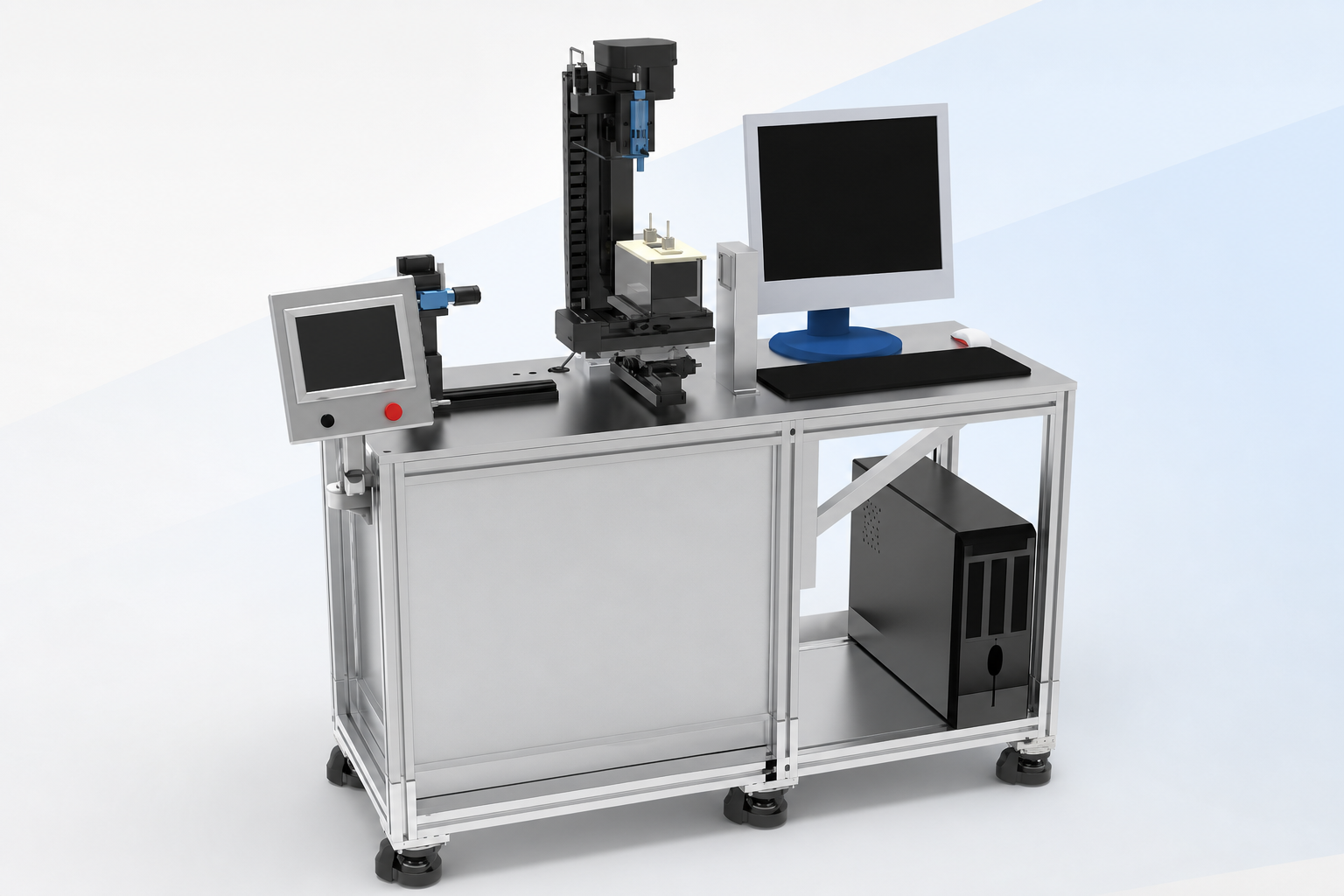
Organize in-situ evaluation and multi-position testing around pores, wetting and gas transport in GDE / GDL materials.
View BPCC-A->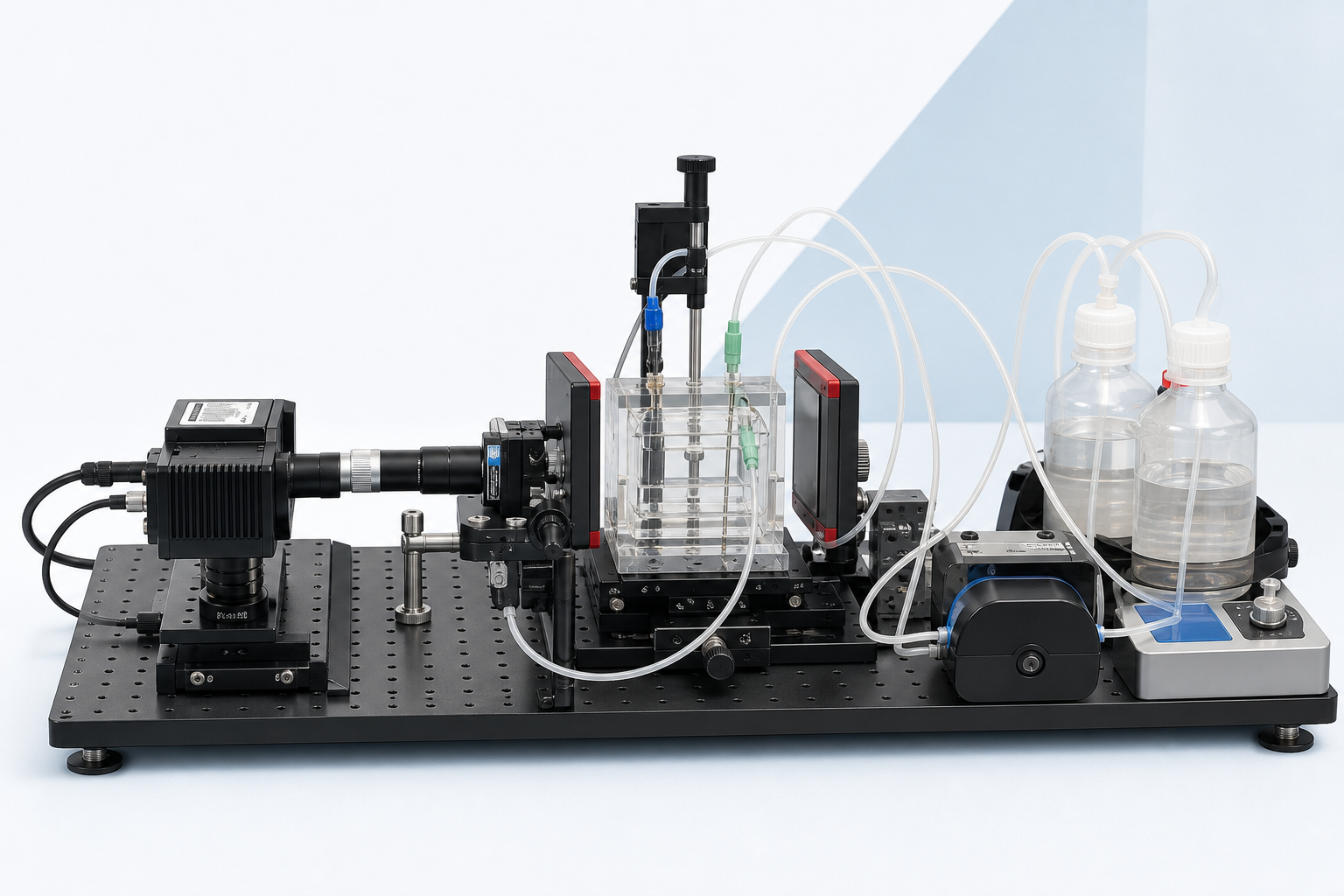
Record bubble formation, growth, coalescence and detachment to study interface changes during gas evolution.
View WEBA-101->